Birdcage | June 2026
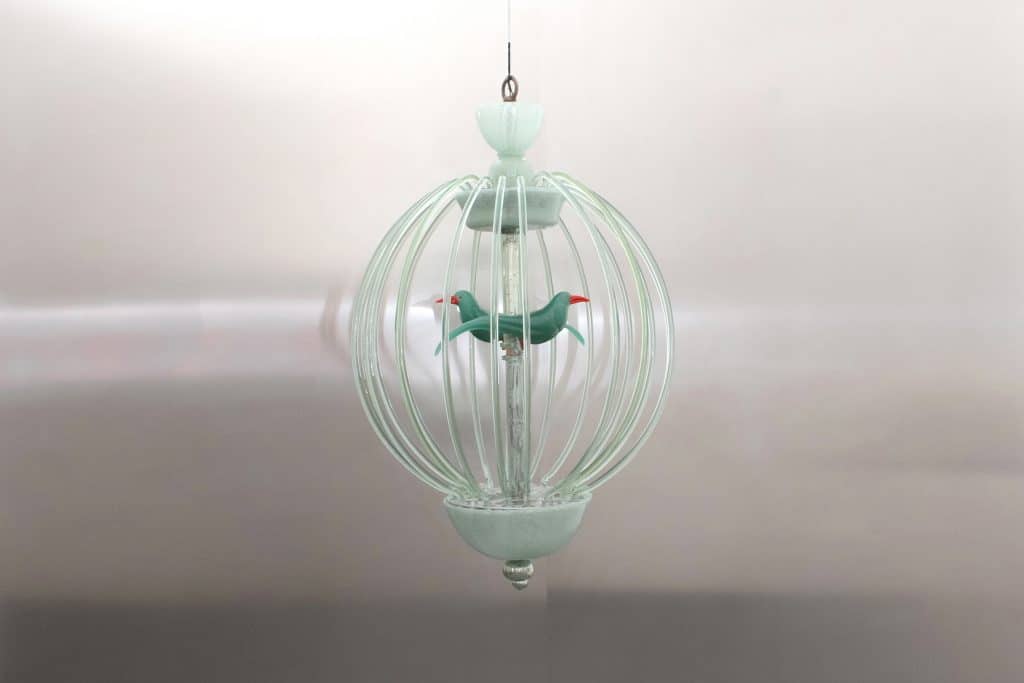
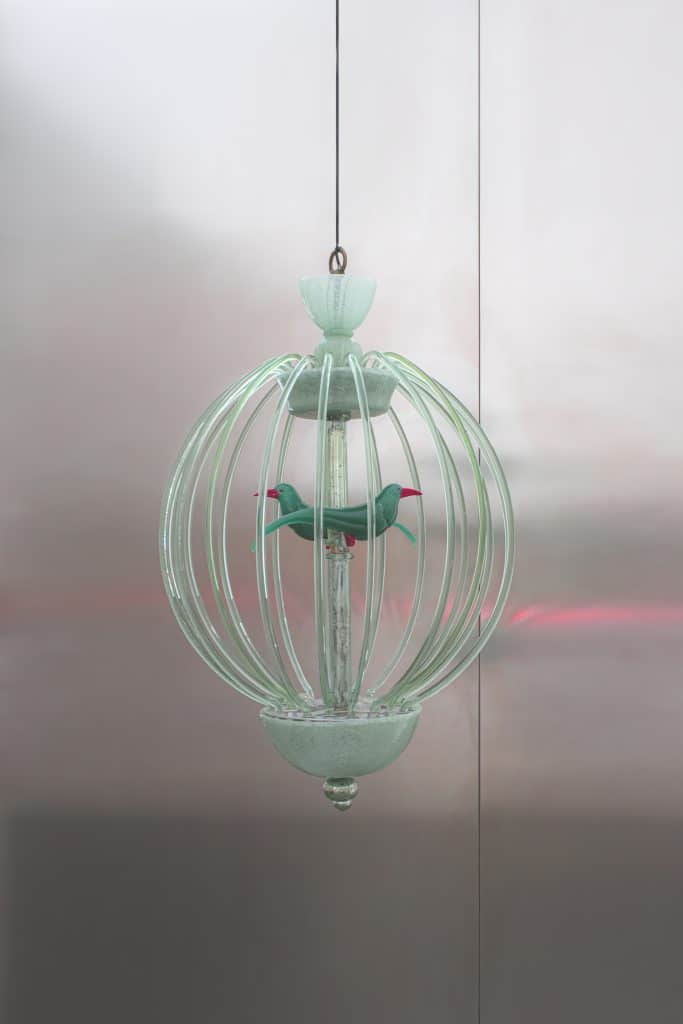
This Luminous Cage, designed by Carlo Scarpa between 1928 and 1929 within the context of his collaboration with the MVM Cappellin glassworks, constitutes a fascinating synthesis of creative audacity and technical mastery. The work is placed, in fact, in a crucial phase for Muranese manufacturing, marked by an important formal simplification, balanced by technical research that pushes virtuosity toward outcomes of extraordinary sophistication.
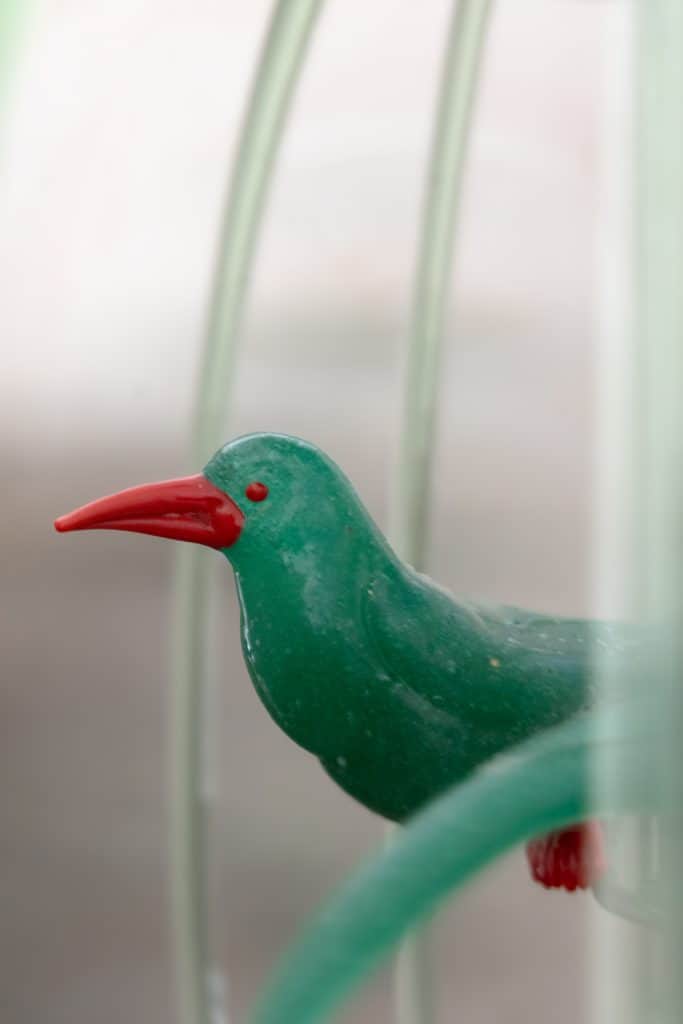
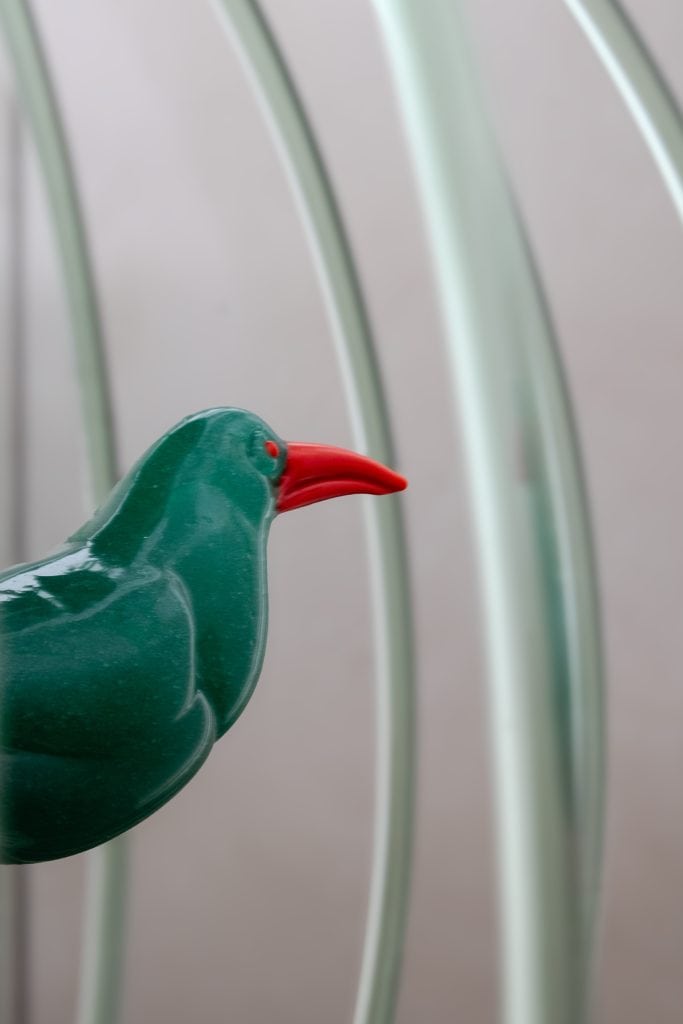
Made of transparent green glass, the chandelier stands out for its iconic spherical cage structure, which encloses a pair of glass birds defined by coral glass paste details. The presence of these birds—identifiable probably as myna birds—gives the object an unprecedented and poetic narrative dimension: it is, in fact, a rare variant, considering that the versions documented so far of this model feature parrot-shaped subjects.
Scarpa skillfully reinterprets formal suggestions of the past, elevating them through an innovative use of electric light, strategically positioned at the base to emphasize the transparency and intrinsic fragility of the glass material. In this way, the work transcends its mere illuminating function to propose itself as a true aerial sculpture.
Recently rediscovered in Florence, where it was kept by a family that acquired it in Venice in the 1930s, this specimen represents an essential testimony of Scarpa’s research into the decorative use of glass and the manipulation of light, which were central elements of the architectural and domestic language of the interwar period.