Elektrika | September 2026
Between the late 1970s and the early 1980s, Sacha Ketoff was frequently in Florence. He was thirty years old and in love. He had already recorded music and presented works at art galleries in both France and Italy.
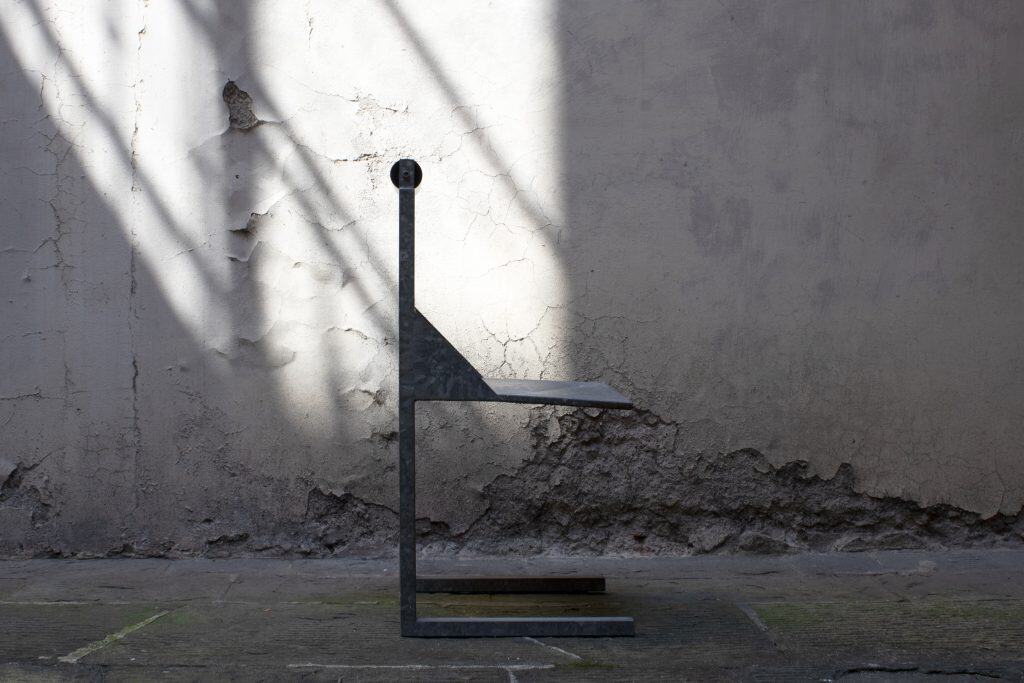
In Florence, he creates his first design objects. The prototype of the Elektrika chair takes shape in the workshop of a Florentine blacksmith. It is 1980. It consists entirely of a welded iron structure, subsequently hot-dip galvanized, with the backrest covered by a segment of polyethylene foam tubing, typically used in plumbing for thermal pipe insulation.
In June 1980, before the galvanization, the photographer Arrigo Coppitz shoots a series of fifteen photographs of the chair, some of which also feature the author, both clothed and naked. Sacha Ketoff will never collect them, and the prototype of the chair, subsequently galvanized, will stay in Florence.
A few years later, in 1983, a new version of the chair in enameled iron is produced in France by Andrée Putman’s company Ecart International: a few copies are destined for very exclusive collections, including that of Karl Lagerfeld, who will choose six Elektrika chairs and a table—also designed by Ketoff—for his home in Monte Carlo.
Coppitz’s photographic shoot, which has remained unpublished until now, has recently been traced along with the original prototype of the chair. These two extraordinary documents tell the story of a work and its author in an era that looks to the future with great irony and little modesty, in the belief that the electricity of the newly begun decade could remain constant and low-voltage, ensuring the domestic use of an electric chair.
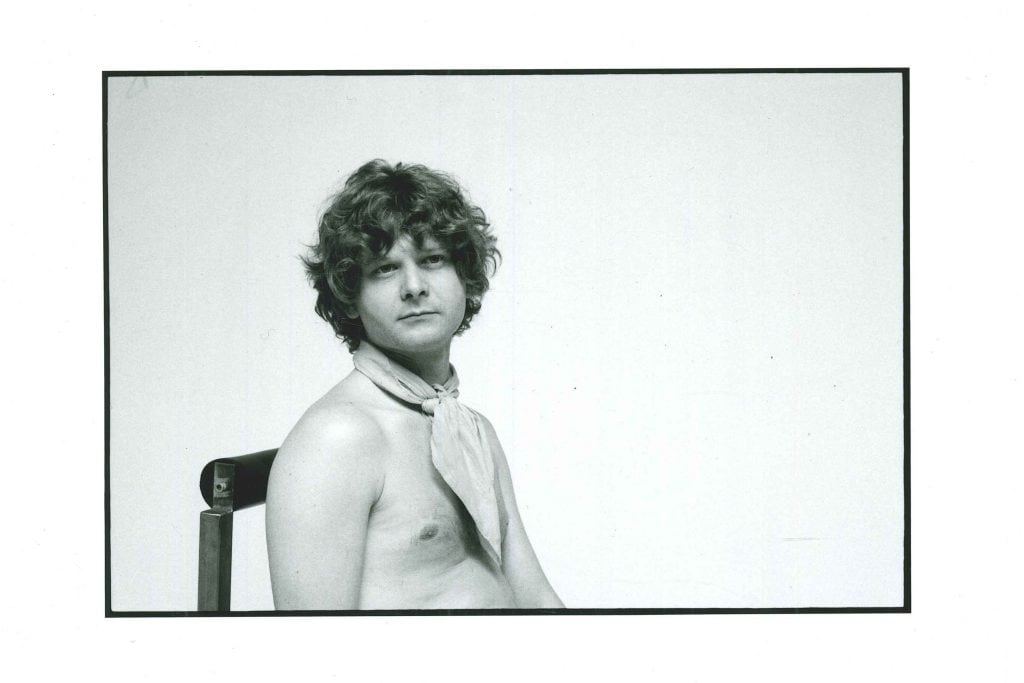
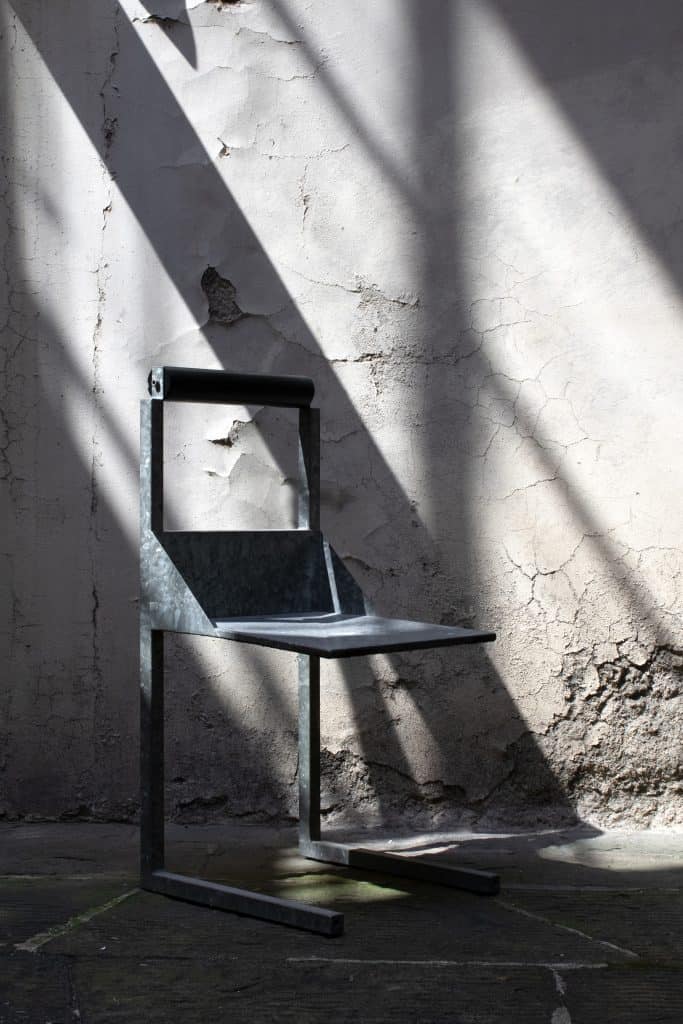
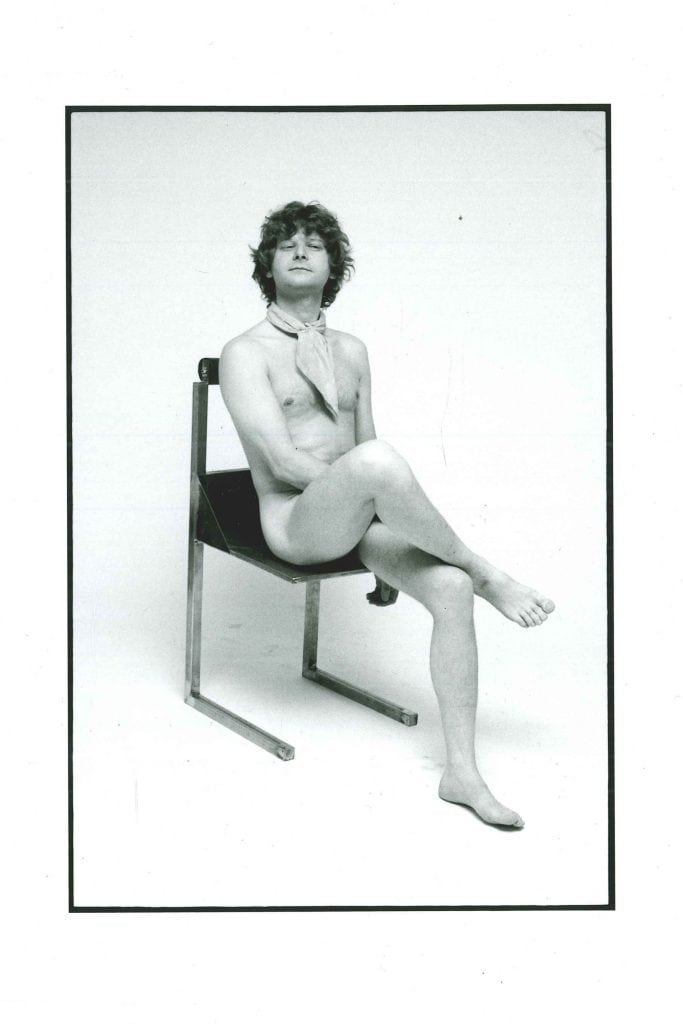
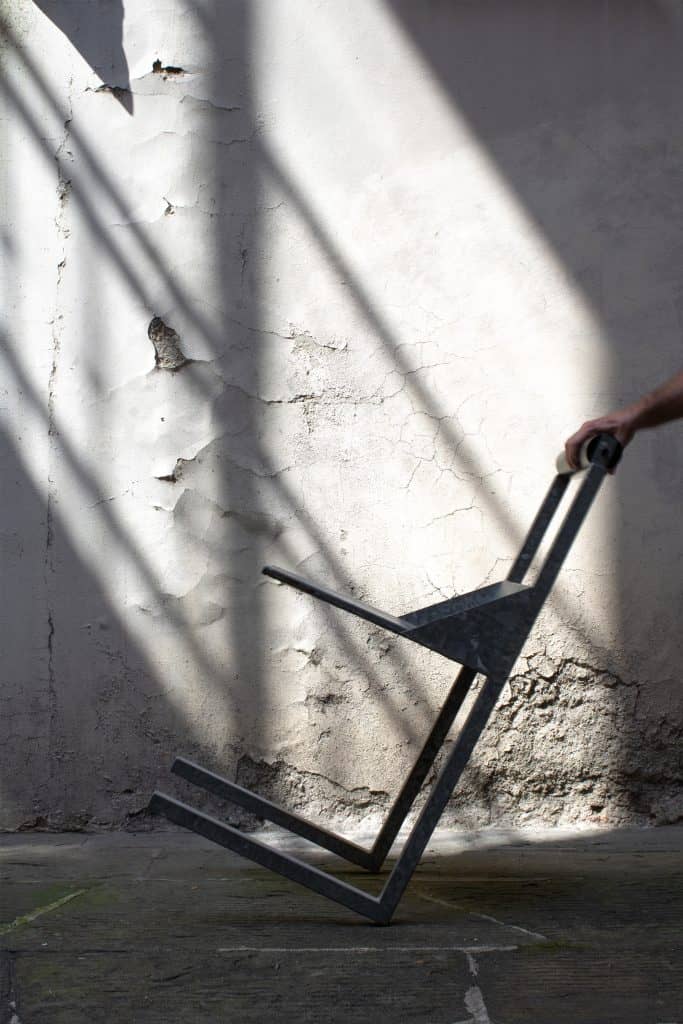
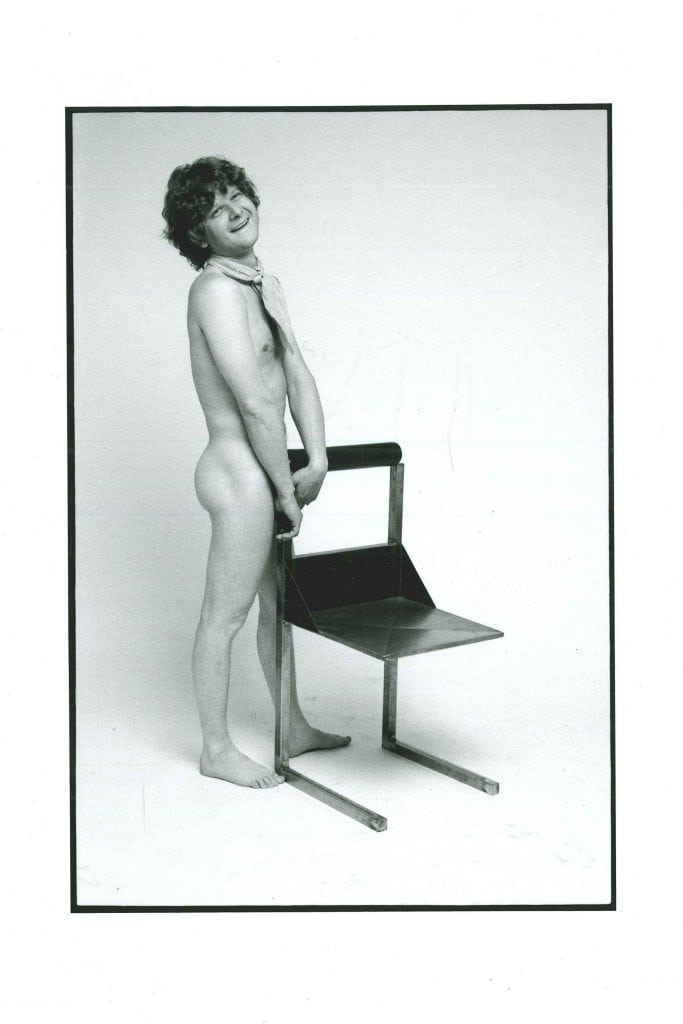
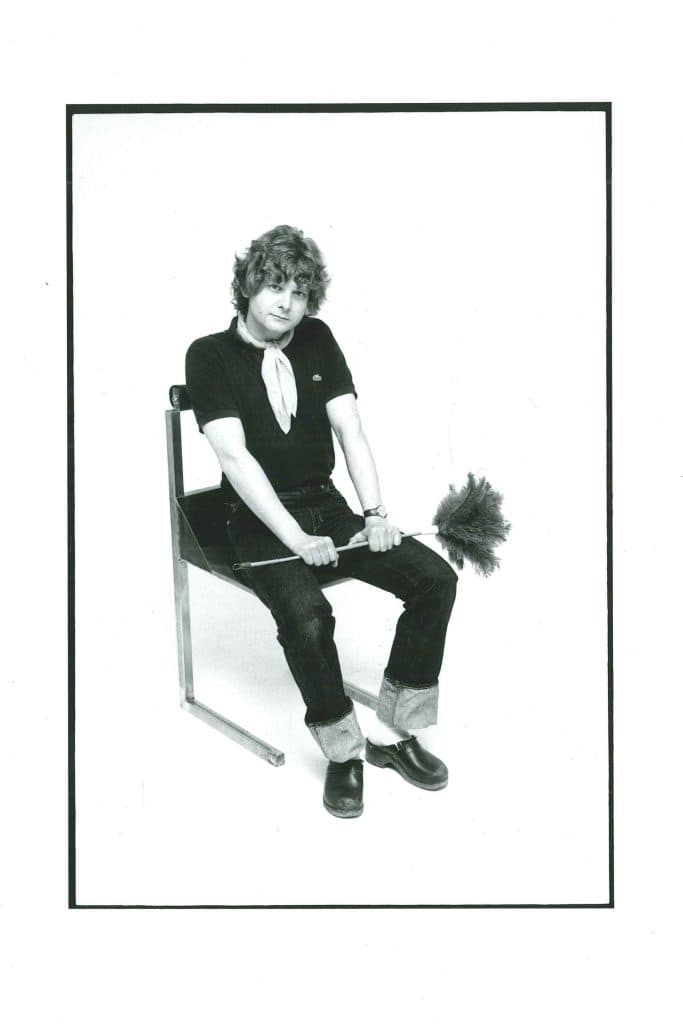
Photos of Sacha Ketoff by Arrigo Coppitz, 1980